
Accessibility in Web Design: Beyond ADA Compliance

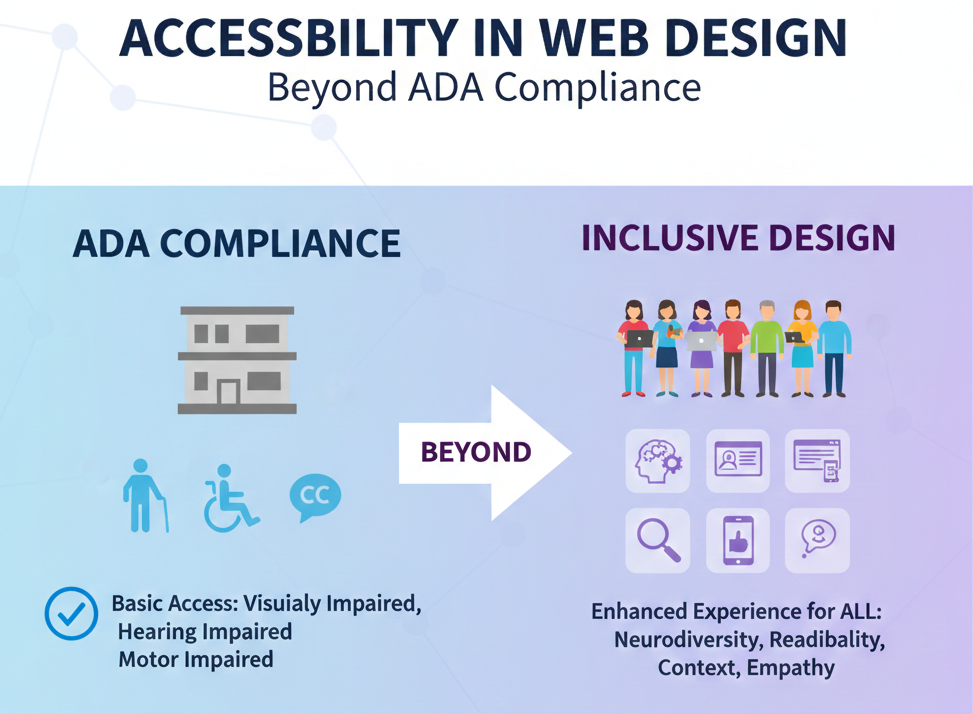
Web accessibility means more than following laws. Many people think accessibility only exists to meet ADA rules. That idea limits the true value of accessible design. Accessibility helps everyone use the web with ease. It supports people with disabilities, older users, mobile users, and anyone who needs clear and simple design.
When designers build websites with accessibility in mind, they create better experiences for all users. Businesses also gain better search results, stronger trust, and wider reach. This article explains what accessibility really means and how web design can go beyond ADA compliance.
What Is Accessibility in Web Design?
Accessibility in web design means people can use a website no matter how they interact with it. Some users rely on screen readers. Some use keyboards instead of a mouse. Others need larger text or stronger color contrast.
Accessible websites allow users to:
- Read content clearly
- Navigate easily
- Understand instructions
- Interact without barriers
Web Content Accessibility Guidelines, known as WCAG, guide designers and developers. These rules focus on four goals. Content must be perceivable, operable, understandable, and robust. ADA compliance often refers to meeting these guidelines, but true accessibility goes further.
Why Accessibility Matters Beyond ADA Compliance
Accessibility Improves User Experience
Accessible design makes websites easier for everyone. Clear headings help users scan pages faster. Simple language helps users understand content without effort. Logical navigation helps people find what they need.
Many users benefit from accessibility without realizing it. Someone using a phone in bright sunlight needs good contrast. Someone with a slow internet connection needs clean and simple layouts. Accessibility improves comfort and ease for all visitors.
Accessibility Supports Better SEO
Search engines favor accessible websites. When designers use proper headings, alt text, and structured content, search engines understand pages better. This structure improves indexing and ranking.
Accessible sites also reduce bounce rates. Users stay longer because they can read and navigate with ease. Search engines notice this behavior and reward it with better visibility.
Accessibility Builds Trust and Brand Value
When people feel included, they trust brands more. Accessible websites show care, responsibility, and professionalism. Visitors feel welcome instead of frustrated.
Companies that ignore accessibility risk legal action, but more importantly, they lose credibility. When a website works for everyone, it reflects strong values and long-term thinking.
Accessibility Expands Your Audience
Millions of people live with disabilities. Many more face temporary or situational challenges. When a website excludes these users, it loses potential customers.
Accessible design opens doors to new markets. It allows more people to engage, learn, shop, and connect. Businesses that invest in accessibility reach more users without extra marketing costs.
Moving Beyond Compliance With Inclusive Design
ADA compliance sets a minimum standard. Inclusive design focuses on real people and real needs. It starts with empathy and planning.
Inclusive design asks questions like:
- Who might struggle with this feature?
- How can we make this easier?
- Can users customize their experience?
This mindset shifts accessibility from a checklist to a design value.
Understand Real Users
Designers should learn how different people use websites. User testing helps identify barriers early. Listening to feedback improves design quality.
When teams include accessibility from the start, they avoid costly fixes later. Early planning saves time and improves results.
Offer Flexible Design Choices
Users have different needs. Some prefer larger text. Some need fewer animations. Some need clear focus indicators.
Websites should allow users to adjust:
- Font size
- Contrast
- Navigation methods
Flexible design supports independence and comfort.
Follow Universal Design Principles
Universal design means creating solutions that work for everyone from the beginning. Designers should not add accessibility later. They should build it into layouts, content, and interactions.
This approach reduces complexity and improves clarity for all users.
Practical Ways to Design Accessible Websites
Use Clear and Simple Language
Short sentences help users read faster. Simple words improve understanding. Clear instructions reduce confusion.
This approach also improves readability for children, older adults, and non-native speakers.
Structure Content Properly
Headings should follow a logical order. Lists should group related items. Sections should stay focused.
This structure helps screen readers and improves scanning for all users.
Add Meaningful Alt Text
Alt text describes images for users who cannot see them. It should explain purpose, not just appearance.
Good alt text improves accessibility and image search visibility.
Ensure Keyboard Navigation
All features should work with a keyboard. Users should move through links, forms, and buttons easily.
Visible focus states help users track where they are on the page.
Use Strong Color Contrast
Text should stand out from the background. Good contrast helps users with low vision and reduces eye strain.
Designers should not rely on color alone to share information.
Caption and Transcribe Media
Captions help users who cannot hear audio. Transcripts help users who prefer reading.
These tools also improve content engagement and search performance.
Test With Real People
Automated tools help identify issues, but real users reveal deeper problems. Testing with people who use assistive technology provides valuable insights.
Regular testing keeps websites accessible as they grow.
Measuring Accessibility Success
Teams should track accessibility like any other performance goal. Regular audits help maintain standards.
Useful metrics include:
- User feedback
- Time on page
- Bounce rates
- Conversion rates
- Search visibility
Accessibility works best as an ongoing process, not a one-time task.
Accessibility Is a Long-Term Investment
Accessible websites perform better over time. They adapt to new devices, new users, and new expectations.
Businesses that commit to accessibility gain loyal users and stronger digital presence. Inclusive design creates value that lasts.
Conclusion
Accessibility in web design goes far beyond ADA compliance. It improves usability, trust, reach, and performance. It creates websites that serve people, not just rules.
When designers focus on clarity, flexibility, and inclusion, they build better digital experiences for everyone.
At Houston Texas Website Design, we create websites that welcome everyone. We design with accessibility, usability, and performance in mind from the start. If you want a website that goes beyond compliance and truly connects with users, contact Houston Texas Website Design today. Let us help you build an inclusive, future-ready website that works for all.