
How Page Speed Impacts User Experience and Conversions?

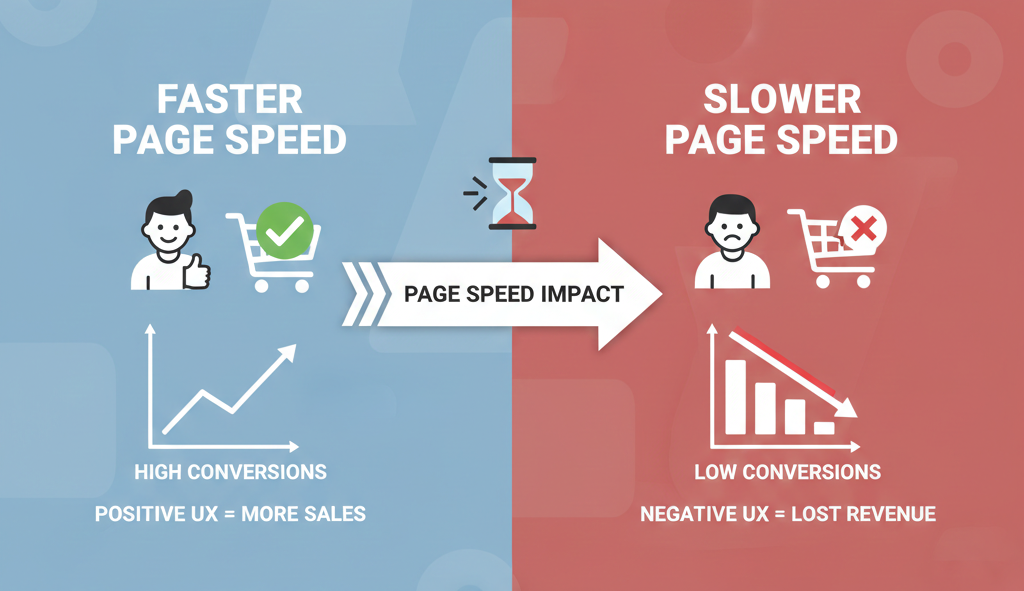
Page speed is how fast a web page loads. You might not think about it often, but it matters a lot. When someone clicks a link, they expect the page to appear quickly. If it takes too long, they get impatient. They leave. They go elsewhere. For every business with a website, speed is not just a tech term. This is a part of how people feel about the site. It affects whether they stay or go. Even affects whether they become a customer.
In this post, we will explore how page speed affects user experience and conversions. And we will explain why this matters for website owners, especially those who want results online.
Why Page Speed Matters?
When people visit a website, they want answers fast. They do not want to wait. If a page takes too long to load, visitors lose interest. They might close the tab. They might never return.
A fast page makes users feel good. It shows that the business behind the site cares about the experience. A slow page makes people feel annoyed. It feels unprofessional. It makes users doubt the brand.
For businesses in Houston, Texas, page speed can be a make-or-break factor. Local users have choices. They compare websites quickly. A slow site loses attention and leads to lost opportunities.
The Link Between Page Speed and User Experience
User experience is how visitors feel when they use a website. Good user experience keeps people engaged. Page speed is a big part of that feeling.
Imagine you click a link to read a local event announcement. You expect it to load in seconds. But it takes too long. You start to tap your finger, you get frustrated, and you leave. That negative experience means you are less likely to come back.
A fast page feels smooth. It shows content quickly. That makes people feel comfortable and in control, they keep reading they explore other pages they trust the website.
Page speed influences how users see the whole brand. It is not just about one page. It affects the overall impression.
How Page Speed Affects Conversions?
Conversions are actions users take that matter to a business. These can be:
- Filling out a contact form
- Signing up for a newsletter
- Buying a product
- Booking a service
If a page is slow, people abandon before they complete these steps. Slow pages create hesitation. They break focus. They give people a reason to leave.
Studies have shown that even a one-second delay can reduce conversions. A faster site keeps users engaged from start to finish. When the site loads quickly, users stay focused on the message. They are more likely to take action.
This is true for every type of website, whether it is an online shop, a service page, or a contact form.
Page Speed and Search Engine Visibility
Search engines like Google want to show users the best results. Fast-loading websites are part of that. Google uses page speed as one of the ranking factors. This means that faster sites are more likely to appear higher in search results.
Higher ranking means more visibility. More visibility means more visitors. And more visitors mean more chances to convert.
If a website loads slowly and ranks lower, it will get fewer clicks. This affects traffic and long-term growth.
Real Example: Local vs Slow
Imagine you search for “best pizza in Houston.” Two websites appear. One loads instantly. The other takes five seconds. You are likely to click the fast one first. You are also more likely to stay and explore menus or order online.
That first impression matters. Local businesses compete for attention. Fast pages give them a clear advantage.
What Makes a Page Slow?
There are many reasons a web page can be slow. Some common ones include:
- Large images that are not optimized
- Too many scripts running at once
- Heavy design elements
- Lack of browser caching
- Hosting that is slow or shared with other sites
The good news is these issues can be fixed. With the right guidance, a website can become much faster. It just takes careful planning and the right tools.
Simple Ways to Make Pages Faster
Improving page speed does not always require complex code. Some simple steps include:
- Compress images: Large photos slow down pages. Compressing them makes them load faster.
- Use browser caching: This helps repeat visitors see pages faster.
- Minimize scripts: Too many scripts can slow load times. Keep what is necessary.
- Choose a good host: Better servers mean faster websites.
- Optimize videos: Embed them carefully and use lightweight players.
These steps improve performance and help users enjoy a smoother experience.
Why Businesses Should Care?
For business owners, page speed affects the bottom line. A slow site can cost:
- Lost sales
- Fewer lead submissions
- Lower trust in the brand
- Poor search rankings
On the other hand, a fast site can:
- Increase conversions
- Improve search visibility
- Boost user satisfaction
- Increase return visits
When users have a good experience, they stay longer and interact more. More interactions often lead to more business.
Mobile Users and Page Speed
More people use phones to browse websites than desktops. Mobile users expect instant results. If a page is slow on mobile, they will leave fast.
Local searches like “plumber near me” or “best coffee in Houston” usually happen on phones. If your site loads fast, local users will stay. If it is slow, they will go to a competitor.
Mobile speed matters more than ever in today’s digital world.
The Role of Design in Speed
Good design and speed go hand in hand. A design that is too heavy or cluttered can slow down a website. Clean, simple, and purpose-driven design improves both speed and usability.
When a design focuses on what users need, it loads faster and keeps attention. Users feel calm and confident.
Design that slows down a website can drive users away, no matter how pretty it looks.
Why Professional Help Makes a Difference?
Improving page speed often requires expert help. A trained web designer knows how to:
- Measure performance with real tools
- Identify issues that slow pages
- Apply solutions without breaking the site
- Test continuously for improvements
If you want a website that performs well and converts visitors into customers, professional help makes a real difference.
For businesses in Houston and beyond, Houston Texas Website Design offers services to optimize performance, improve page speed, and enhance overall user experience.
Affordable Web Design That Works
You do not need to pay a fortune for a fast website. Affordable Web Design Solutions can deliver:
- Better performance
- Faster loading times
- Improved user satisfaction
- Higher conversions
A fast website is an investment. It pays back through more engagement, more leads, and better online presence.
Long-Term Growth and Speed
Page speed is not a one-time project. Websites evolve. New content, images, and features get added. Testing speed regularly and fixing issues helps keep performance strong over time.
Website owners should check speed often and make small improvements whenever possible.
Conclusion
Page speed is one of the most important parts of web design. It affects how users feel, how long they stay, and whether they take action. Fast pages keep users happy and boost conversions.
A slow page drives visitors away. It can hurt search rankings and cost business opportunities.
For Houston businesses, a fast website means better local reach, more satisfied users, and higher conversions. If you want a website that performs well and delivers results, consider professional support. Build a fast, user-friendly website with Houston, Texas Website Design and see how speed can change your online success.